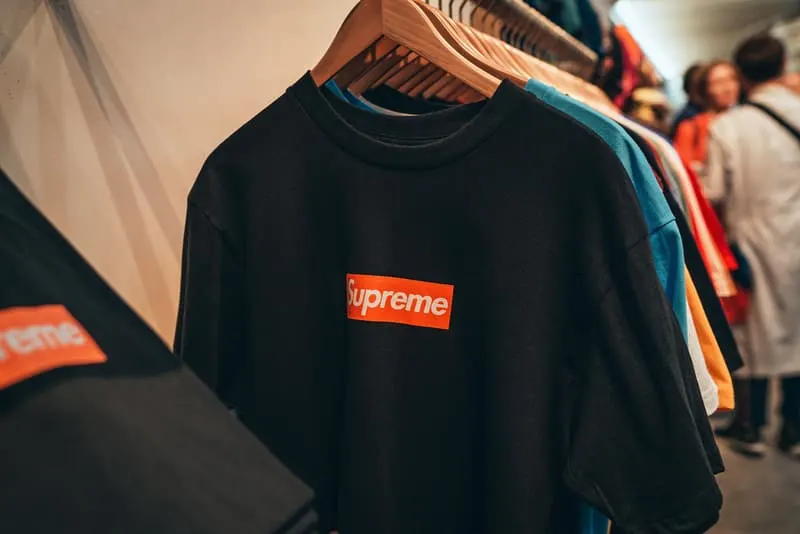
Supreme: When Being Hard to Get Becomes the Brand
Supreme built a global following by making its products hard to get. Its later challenges show how tricky the relationship between scarcity and growth can be.
The Challenge
Supreme opened as a skate shop in New York City in 1994. Small production runs, first a way to avoid unsold stock, became one of the most recognizable business models in streetwear.
Supreme did not start with the resources of a major fashion company. Its founder, James Jebbia, faced a problem many independent shops know well: produce too much and you are left with stock that does not sell. In interviews, Jebbia has described limited production as partly a response to those early financial realities. Small runs simply reduced the risk.
Inside the Project
What began as a practical decision in a small skate shop turned into one of streetwear's most recognizable business models.
How Limited Drops Created Demand
Supreme built a release model around limited quantities and regular drops. Instead of keeping every item in stock, it released new products in small batches.
That changed how people shopped. Customers followed release schedules and had to decide quickly, before an item was gone. Every drop became a new moment of attention, and collaborations brought unexpected products into the brand's world.
Scarcity Worked Because It Had Meaning
Limited availability alone does not make a product desirable. If people do not care about it, making it scarce will not create lasting demand.
Supreme's credibility came from its roots in skate culture, its distinctive identity and the community around it. That distinction matters for any brand thinking about limited releases.
When Growth Changes What Makes a Brand Valuable
Supreme grew into a major global fashion business, and in 2020 VF Corporation acquired it for approximately $2.1 billion. Expansion raised a hard question: could it grow without weakening the exclusivity that made it successful?
Supreme reported declining revenue in fiscal 2023, and industry observers questioned whether the scarcity model could keep scaling. In 2024, VF Corporation sold Supreme to EssilorLuxottica for $1.5 billion.
None of this means limited drops stopped working. It shows that a strategy that works brilliantly at one stage can become harder to sustain as the business changes.
What Brands Should Learn From Supreme
- —Build a recognizable brand before relying on hype
- —Give every limited release a real reason to exist
- —Understand what customers value beyond availability
- —Protect product quality as demand grows
- —Expand without losing the brand's original identity
- —Do not confuse short-term excitement with lasting loyalty
Turning Releases Into Brand Experiences
For a growing brand, a limited collection is a chance to experiment with design, materials, printing, labels and finishing. Shirtual helps brands develop custom apparel and merchandise that fit into a larger product or collection strategy.
Sources
- —UVA Darden: Supreme, What's the Shelf Life of Hype?
- —Modern Retail: How Supreme Lost Its Luster
- —Cover image via Hypebeast
The Results
The Outcome
Limited drops work when they serve a clear purpose, such as launching a collection, celebrating a collaboration or testing an idea. The risk starts when scarcity becomes the entire strategy. The strongest releases are not the ones with the smallest quantities, but the ones customers have a reason to remember.
In Their Words
“Scarcity amplified Supreme's appeal. It never replaced the identity that made the products relevant.”